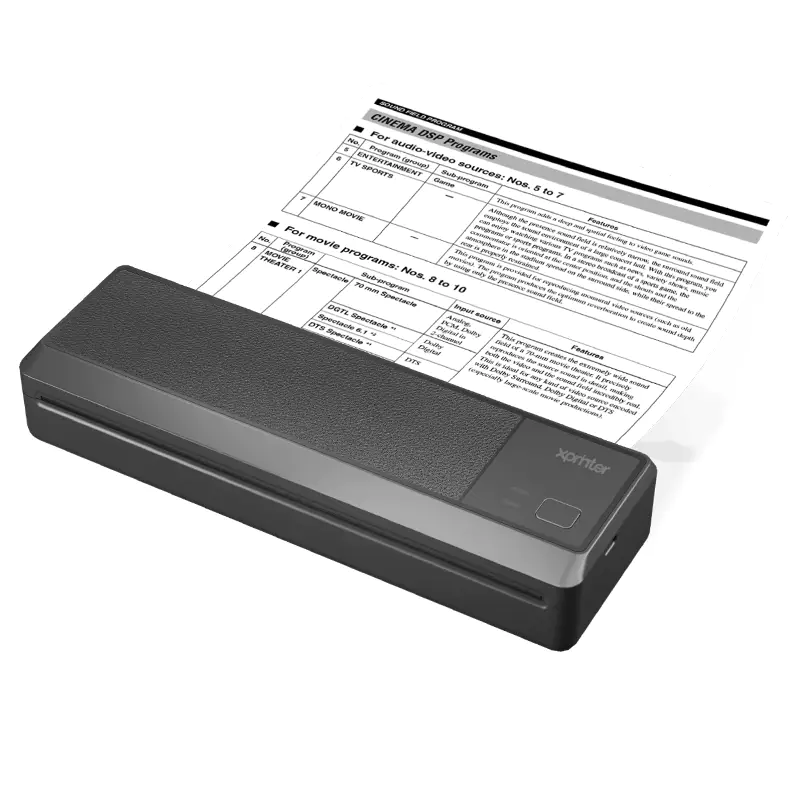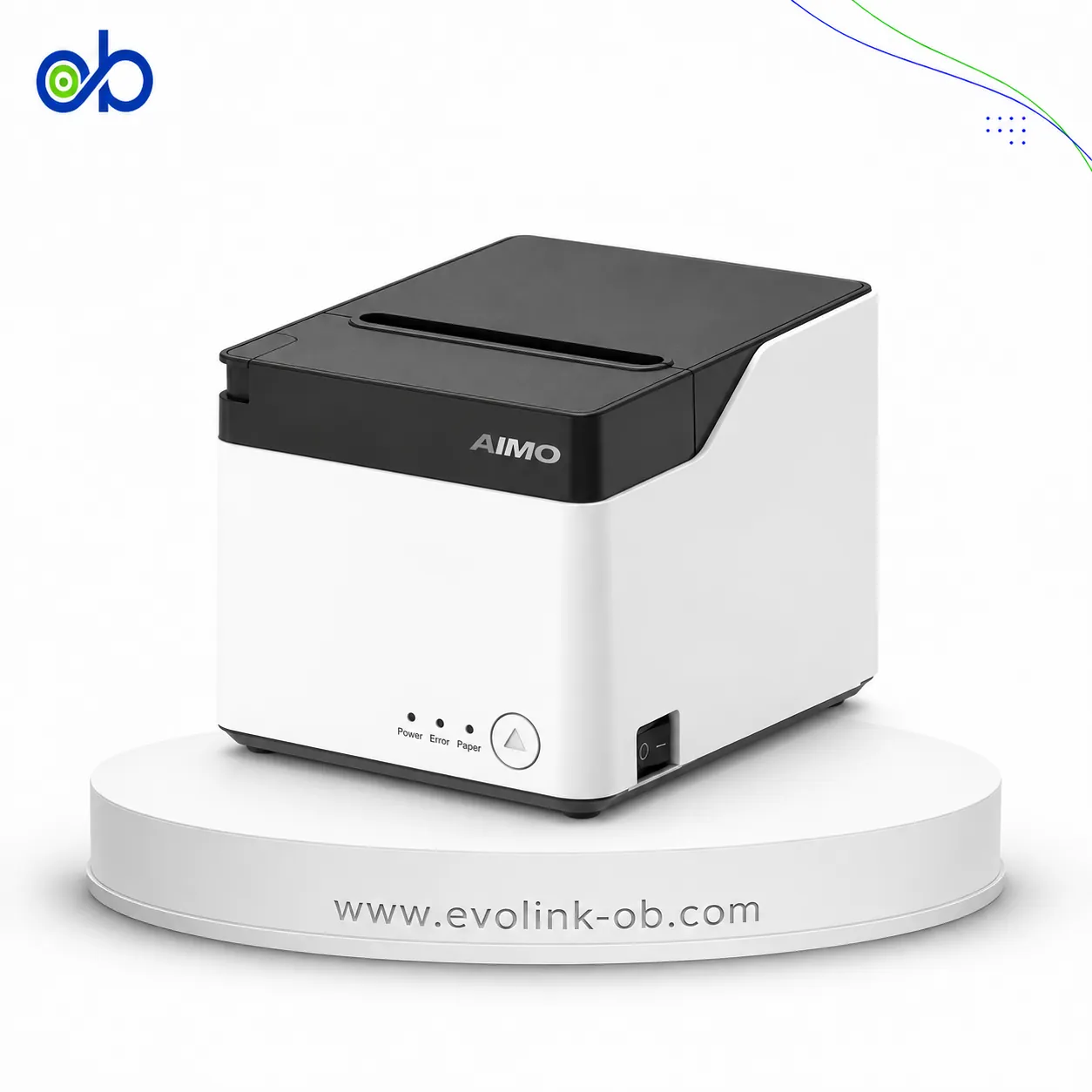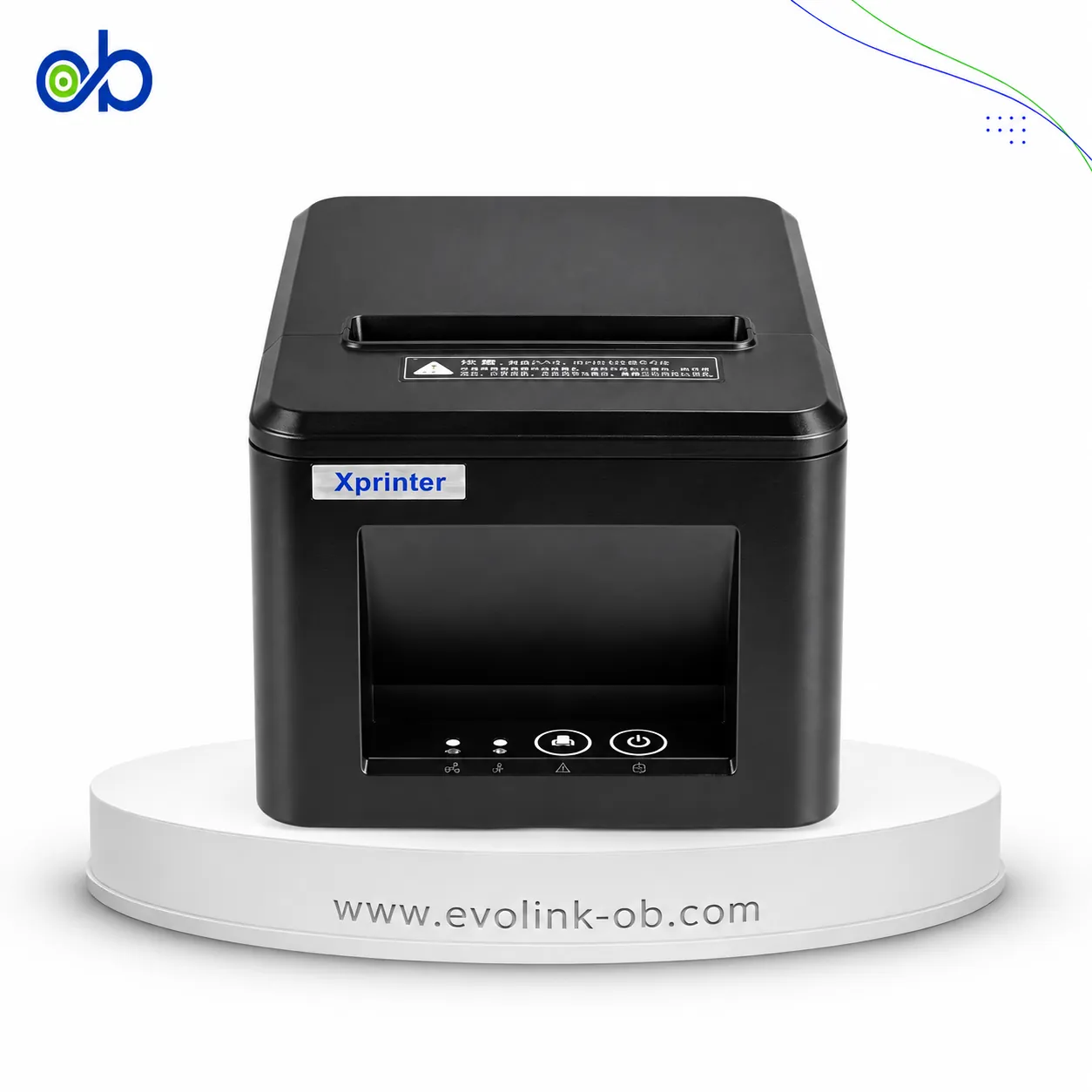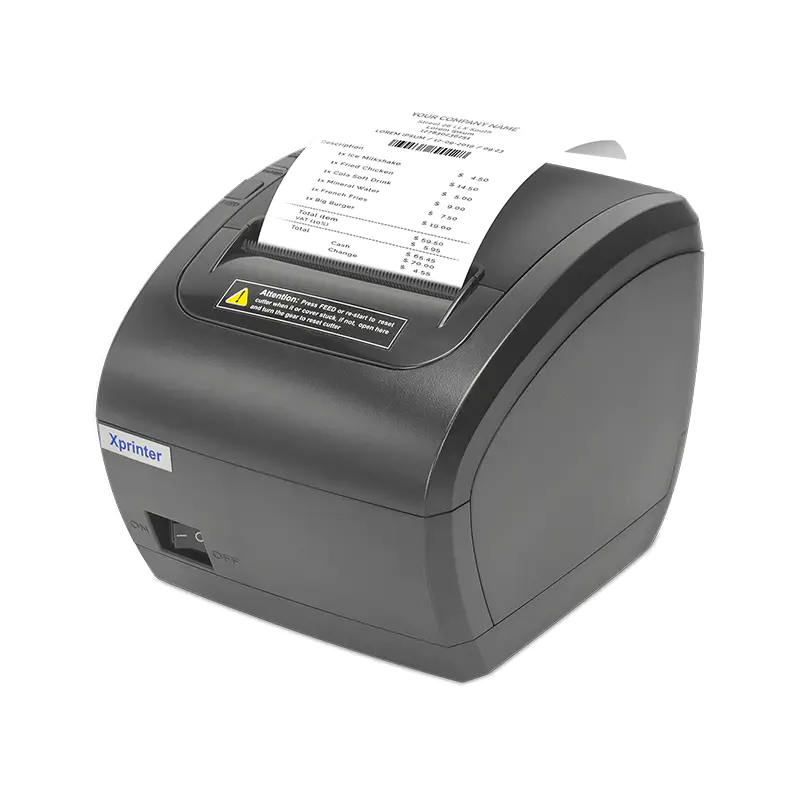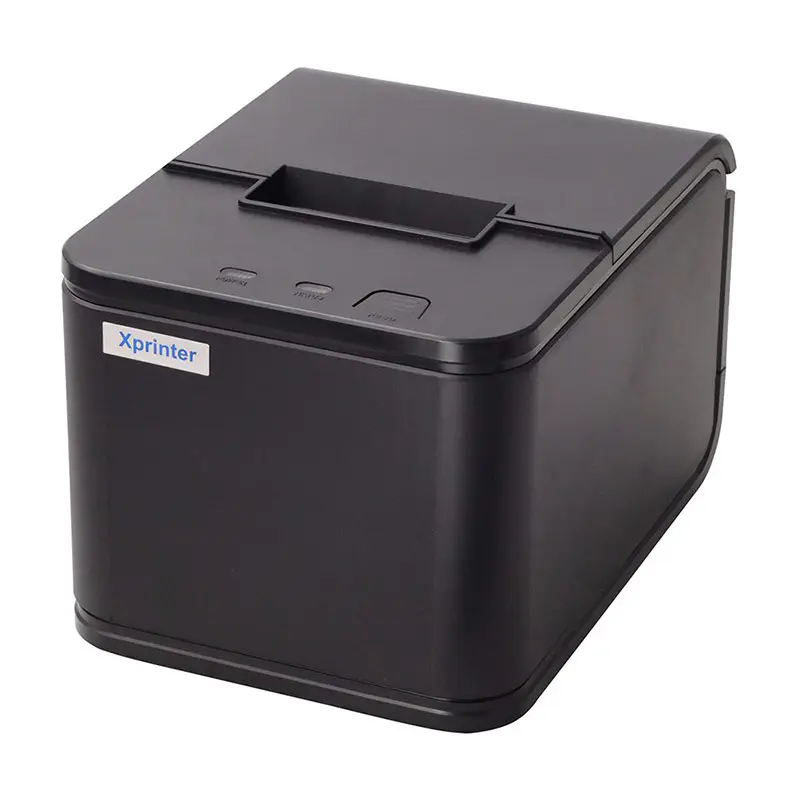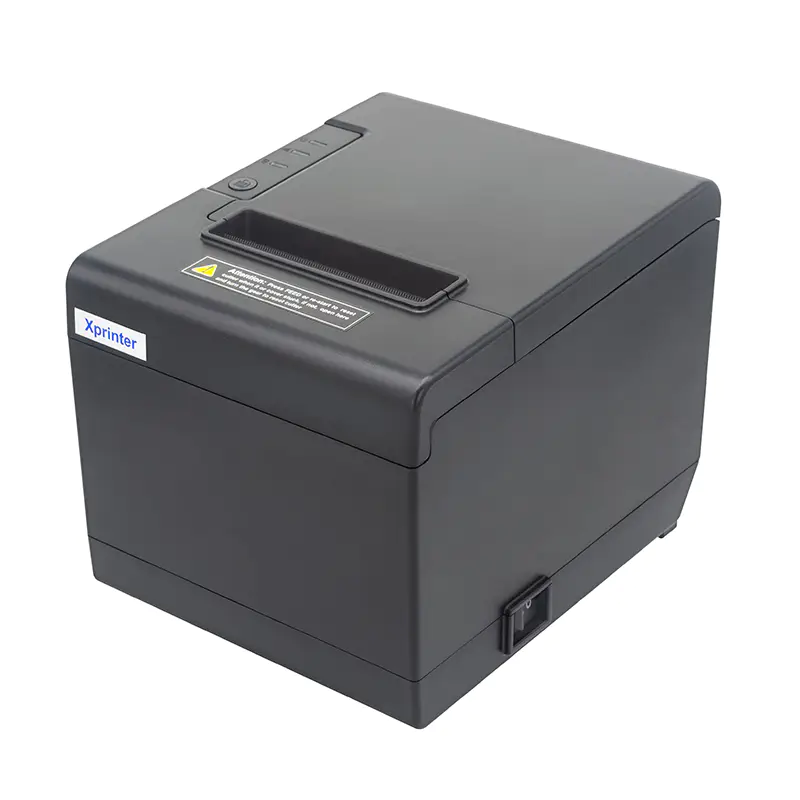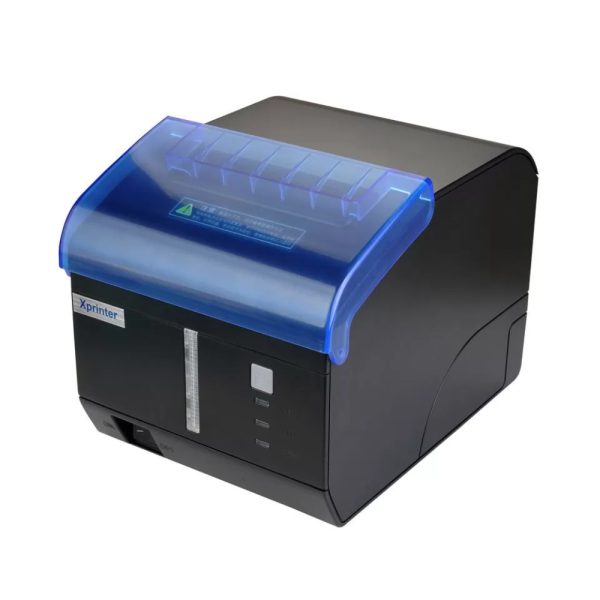

Thermal Printer Xprinter XP-76II+
Xprinter XP-76II+ 9-pin impact receipt printer, 4.5 lines/s, USB, LAN, serial and parallel interfaces, origina…
Not for sale
A full side-by-side comparison of reference model Thermal Printer Xprinter XP-76II+ and in-stock product Thermal Printer Xprinter Q80B on specs, price, and Syria availability.
Xprinter XP-76II+ 9-pin impact receipt printer, 4.5 lines/s, USB, LAN, serial and parallel interfaces, origina…
Not for sale
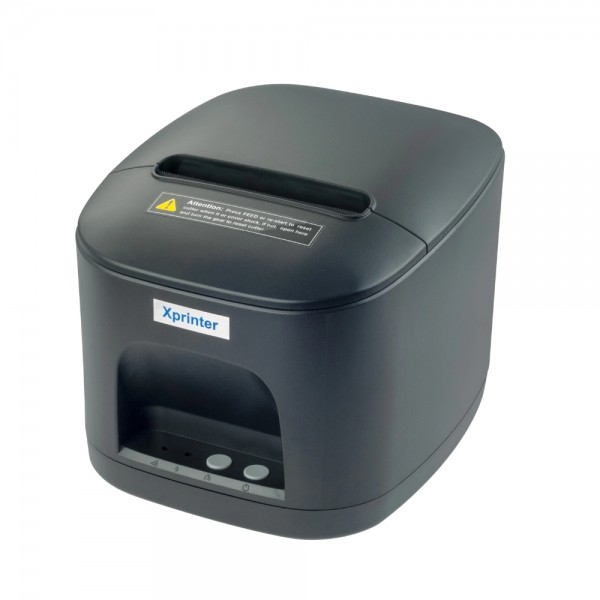
An 80 mm direct thermal receipt printer with a 230 mm/s speed and 72 mm print width, offering USB connectivity…
$35.00
in stock
| Specification | Thermal Printer Xprinter XP-76II+ | Thermal Printer Xprinter Q80B - 80mm |
|---|---|---|
| Price | Not for sale | $35.00 |
| Printer Specifications | ||
| تقنية الطباعة | Impact Dot Matrix – 9 Pin | Direct Thermal |
| Media Handling | ||
| Media Width | 75.5 ± 0.5 mm | 79.5±0.5 mm |
| Maximum Paper Roll Diameter | 65 mm | — |
| Paper Type | — | Thermal Receipt Paper |
| Paper Thickness | 0.06–0.08 mm | — |
| Print Width | — | 72 mm |
| Printer Emulation | EPSON and STAR compatible | ESC/POS |
| سرعة الطباعة | 4.5 lines/s mm/s | 230 mm/s |
| Input Buffer | 45 bytes or 4 KB, selectable by DIP switches KB | 96 KB |
| Printing | ||
| Column Capacity | 400 dots/line | 576 or 512 dots/line |
| Line Spacing | — | 3.75 mm |
| Adjustable Line Spacing | — | Yes |
| Column Number | Font A: 33 or 35 characters/line; Font B: 40 or 42 characters/line | Font A: 42/48, Font B: 56/64, Chinese: 21/24 |
| Memory | ||
| NV Flash Memory | — | 256 KB |
| Fonts | ||
| Font A Size | 9 × 9 dots | 1.5 × 3.0 mm (12 × 24 dots) |
| Font B Size | 7 × 9 dots | 1.1 × 2.1 mm (9 × 17 dots) |
| Chinese Font Size | 16 × 16 dots | 3.0 × 3.0 mm (24 × 24 dots) |
| Character Set | — | PC437, Katakana, PC850, PC860, PC863, PC865, West Europe, Greek, Hebrew, East Europe, Iran, WPC1252, PC866, PC852, PC858, IranII, Latvian, Arabic, PT151 (1251) |
| Barcode Support | ||
| Supported 1D Barcodes | — | UPC-A, UPC-E, EAN13, EAN8, CODE39, ITF, CODABAR, CODE93, CODE128 |
| Supported 2D Barcodes | — | QR Code, PDF417 |
| Power | ||
| Power Adapter Input | — | AC 100–240V, 50–60Hz |
| Power Adapter Output | DC 24 V, 2.5 A | DC 24V / 2.5A |
| Printer Input | DC 24 V, 2.5 A | DC 24V / 2.5A |
| Cash Drawer Output | DC 12–24 V, 1 A | DC 24V / 1A |
| Physical | ||
| Dimensions | — | 180x145x130 mm |
| Weight | — | 0.8 kg |
| Environment | ||
| Operating Temperature | 0–50 °C | 0–45 °C |
| Operating Humidity | 10–90 % | 10–80 % |
| Storage Temperature | -10–60 °C | -10–60 °C |
| Storage Humidity | 10–90 % | 10–90 % |
| Reliability | ||
| Auto Cutter | Tear-away cutter | Partial Cut |
| Cutter Life | — | 1500000 cuts |
| Printhead Life | 10,000,000 lines km | 150 km |
| Connectivity | ||
| Supported OS | Windows 9X, Windows ME, Windows 2000, Windows 2003, Windows NT, Windows XP, Windows Vista, Windows 7 | Windows, Linux, macOS, Android |
| Interface | Serial / Parallel / USB / LAN | USB |
| Certifications | ||
| Certifications | — | CCC, CB, CE, FCC, RoHS |
| Features | ||
| Error Alarm Support | — | Yes |
| General | ||
| Model | XP-76II+ | — |
| Warranty | ||
| Manufacturer Warranty | 12 months | — |
Thermal Printer Xprinter XP-76II+ vs Thermal Printer Xprinter Q80B - 80mm — choose by media width, cutter, interfaces, and print speed in the same unit — do not rank printhead life across mixed units.
research reference (not for sale) vs store product.
When to pick which:
Pick Thermal Printer Xprinter XP-76II+ if you need: clearer POS connectivity.
Pick Thermal Printer Xprinter Q80B - 80mm if you need: media width that matches the POS role.
Key differences:
No single overall winner — choose by priority. Top table gaps: Media Width: 75.5 ± 0.5 vs 79.5±0.5; Interface: USB, LAN, Serial, Parallel vs USB; Tkny Altbaaa: Impact Dot Matrix – 9 Pin vs Direct thermal.
Printhead life in lines versus km is not directly comparable.
some shared core values in the table
Pick Thermal Printer Xprinter XP-76II+ if you need: clearer POS connectivity.
Pick Thermal Printer Xprinter Q80B - 80mm if you need: media width that matches the POS role.
Media Width: 75.5 ± 0.5 vs 79.5±0.5
Not when units differ (lines vs km) or print technologies differ. Compare width, cutter, and interfaces first.